

HY-OmniWeaving (8.3B, unified video) on Intel Core Ultra 5 225H NAS (32 GB)

Can the Intel Core Ultra 5 225H NAS (32 GB) run HY-OmniWeaving (8.3B, unified video)?
Barely: it runs very slowly (tight fit · encoder unloaded after use)
Very slow (tight fit · encoder unloaded after use). At FP8 it needs about 15.7 GB of 18.2 GB usable and takes about 86.5 min per clip.
- Best precision
FP8- Memory mode
- Text encoder offloaded
- Time per clip
- 86.5 min
- Output
- 848×480, 81 frames, 50 steps
Download HY-OmniWeaving (8.3B, unified video)
Original weights · Hugging Face
Full-precision files from Tencent, for fine-tuning, vLLM, Transformers, Diffusers or ComfyUI.
Official repo · GitHub
Reference code, inference scripts and docs from Tencent. The weights themselves download from Hugging Face.
github.com/Tencent-Hunyuan/OmniWeaving (opens in a new tab)
git clone https://github.com/Tencent-Hunyuan/OmniWeavingHow it’s rated
Match score
To order lists, each result also gets a match score out of 100 from four parts. It favors the most capable model that still runs well.
| Model quality | 33.5 / 45 | |
|---|---|---|
| Memory fit | 18.0 / 25 | |
| Speed | 2.8 / 15 | |
| Memory use | 15.0 / 15 | |
| Match score | 69.3 / 100 |
Every precision on the Intel Core Ultra 5 225H NAS (32 GB)
| Quant | Memory needed | Available | Speed | Memory mode | Runs | Quality | Download |
|---|---|---|---|---|---|---|---|
FP16 | 10.7 GB | 18.2 GB | 2.0 h | Sequential CPU offload | Very slowCPU offload | 76Great quality (A) · 76 of 100: how capable the model is at FP16, whatever it runs on. Match score 62/100 (quality, fit, speed and memory use) sets the ranking. | Original weights (opens in a new tab) |
FP8 | 15.7 GB | 18.2 GB | 86.5 min | Text encoder offloaded | Very slowtight fit · encoder unloaded after use | 74Great quality (A) · 74 of 100: how capable the model is at FP8, whatever it runs on. Match score 69/100 (quality, fit, speed and memory use) sets the ranking. | Original weights (opens in a new tab) |
Other hardware that runs it
-
74Great quality (A) · 74 of 100: how capable the model is at FP8, whatever it runs on. Match score 83/100 (quality, fit, speed and memory use) sets the ranking.
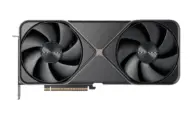 NVIDIA GeForce RTX 5090
-
76Great quality (A) · 76 of 100: how capable the model is at FP16, whatever it runs on. Match score 79/100 (quality, fit, speed and memory use) sets the ranking.
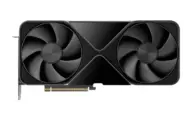 NVIDIA RTX PRO 6000 Blackwell
-
74Great quality (A) · 74 of 100: how capable the model is at FP8, whatever it runs on. Match score 77/100 (quality, fit, speed and memory use) sets the ranking.
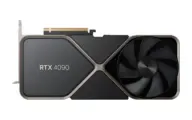 NVIDIA GeForce RTX 4090
-
74Great quality (A) · 74 of 100: how capable the model is at FP8, whatever it runs on. Match score 77/100 (quality, fit, speed and memory use) sets the ranking.
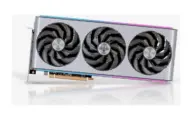 AMD Radeon RX 7900 XTX
-
74Great quality (A) · 74 of 100: how capable the model is at FP8, whatever it runs on. Match score 81/100 (quality, fit, speed and memory use) sets the ranking.
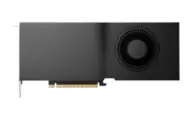 NVIDIA RTX 5000 Ada Generation
-
76Great quality (A) · 76 of 100: how capable the model is at FP16, whatever it runs on. Match score 81/100 (quality, fit, speed and memory use) sets the ranking.
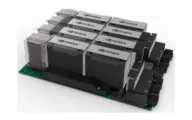 NVIDIA H100 80GB SXM
Quick answers
How much memory does HY-OmniWeaving (8.3B, unified video) need on the Intel Core Ultra 5 225H NAS 32GB?
At FP8 it needs about 15.7 GB. The Intel Core Ultra 5 225H NAS 32GB has 18.2 GB usable.
How long does HY-OmniWeaving (8.3B, unified video) take on the Intel Core Ultra 5 225H NAS 32GB?
About 86.5 min per clip at FP8 and default settings, an estimate scaled from a reference timing by this hardware’s compute speed.
Estimates come from published hardware specs and our open formulas, not from running the model on your machine. Real speed varies with runtime, drivers and settings. Numbers marked “Measured” come from a linked benchmark.