

Ling 3.0 Flash (127B-A5B) on Apple M1 Ultra (128 GB)

Can the Apple M1 Ultra (128 GB) run Ling 3.0 Flash (127B-A5B)?
Yes, it runs well (tight fit)
Runs well (tight fit). At Q4_K_M it needs about 86.4 GB of 96.0 GB usable, with an estimated speed of 106 tok/s.
- Best quant
Q4_K_M- Generation speed
- 106 tok/s
- Prompt processing
- 2,553 tok/s
- First token (1K prompt)
- 0.4 s
- Largest safe context
- 200K
Best app to run it on the Apple M1 Ultra (128 GB)
On macOS
- Point-and-click: search, download and chat in one window.


Download Ling 3.0 Flash (127B-A5B)
Recommended for the Apple M1 Ultra (128 GB): Q4_K_M. Every other quantization has its own download link in the table below.
Quantized files · GGUF
Works in LM Studio, llama.cpp, Jan and Ollama. No sign-in needed.
Download the Q4_K_M files (opens in a new tab)
huggingface.co/inclusionAI/Ling-3.0-flash-GGUF (opens in a new tab)
ollama run hf.co/inclusionAI/Ling-3.0-flash-GGUFOriginal weights · Hugging Face
Full-precision files from Ant Group (inclusionAI), for fine-tuning, vLLM, Transformers.
huggingface.co/inclusionAI/Ling-3.0-flash (opens in a new tab)
How it’s rated
Match score
To order lists, each result also gets a match score out of 100 from four parts. It favors the most capable model that still runs well.
| Model quality | 35.1 / 45 | |
|---|---|---|
| Memory fit | 24.0 / 25 | |
| Speed | 15.0 / 15 | |
| Memory use | 15.0 / 15 | |
| Match score | 89.1 / 100 |
Every quantization on the Apple M1 Ultra (128 GB)
| Quant | Memory needed | Available | Speed | Runs | Quality | Download |
|---|---|---|---|---|---|---|
Q2_K | 59.7 GB | 96.0 GB | 147 tok/s | Runs great | 57Good quality (B) · 57 of 100: how capable the model is at Q2_K, whatever it runs on. Match score 80/100 (quality, fit, speed and memory use) sets the ranking. | GGUF files (opens in a new tab) |
Q3_K_M | 71.1 GB | 96.0 GB | 126 tok/s | Runs great | 68Good quality (B) · 68 of 100: how capable the model is at Q3_K_M, whatever it runs on. Match score 85/100 (quality, fit, speed and memory use) sets the ranking. | GGUF files (opens in a new tab) |
Q4_K_M | 86.4 GB | 96.0 GB | 106 tok/s | Runs welltight fit | 77Great quality (A) · 77 of 100: how capable the model is at Q4_K_M, whatever it runs on. Match score 89/100 (quality, fit, speed and memory use) sets the ranking. | GGUF · folder (opens in a new tab) |
Q5_K_M | 99.2 GB | 96.0 GB | 78.7 tok/s | Runs wellover GPU memory limit | 79Great quality (A) · 79 of 100: how capable the model is at Q5_K_M, whatever it runs on. Match score 75/100 (quality, fit, speed and memory use) sets the ranking. | GGUF · folder (opens in a new tab) |
Q6_K | 113 GB | 96.0 GB | 69.1 tok/s | Slowfar over GPU memory limit | 81Great quality (A) · 81 of 100: how capable the model is at Q6_K, whatever it runs on. Match score 70/100 (quality, fit, speed and memory use) sets the ranking. | GGUF · folder (opens in a new tab) |
Q8_0 | 144 GB | 96.0 GB | — | Won't run | 82Great quality (A) · 82 of 100: how capable the model is at Q8_0, whatever it runs on. Match score 11/100 (quality, fit, speed and memory use) sets the ranking. | GGUF · folder (opens in a new tab) |
F16 | 264 GB | 96.0 GB | — | Won't run | 82Great quality (A) · 82 of 100: how capable the model is at F16, whatever it runs on. Match score 11/100 (quality, fit, speed and memory use) sets the ranking. | GGUF · folder (opens in a new tab) Original weights (opens in a new tab) |
Memory figures assume 8K of context. Longer conversations or documents grow the KV cache.
Other hardware that runs it
-
82Great quality (A) · 82 of 100: how capable the model is at Q8_0, whatever it runs on. Match score 91/100 (quality, fit, speed and memory use) sets the ranking.
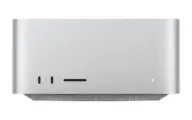 Apple M3 Ultra (256 GB)
-
81Great quality (A) · 81 of 100: how capable the model is at Q6_K, whatever it runs on. Match score 91/100 (quality, fit, speed and memory use) sets the ranking.
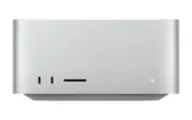 Apple M2 Ultra (192 GB)
-
81Great quality (A) · 81 of 100: how capable the model is at Q6_K, whatever it runs on. Match score 90/100 (quality, fit, speed and memory use) sets the ranking.
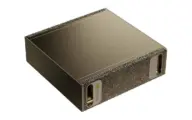 NVIDIA GB10 (128 GB)
-
77Great quality (A) · 77 of 100: how capable the model is at Q4_K_M, whatever it runs on. Match score 90/100 (quality, fit, speed and memory use) sets the ranking.
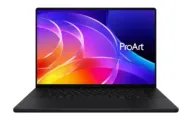 NVIDIA RTX Spark N1X (6144-core GPU) (128 GB)
-
77Great quality (A) · 77 of 100: how capable the model is at Q4_K_M, whatever it runs on. Match score 89/100 (quality, fit, speed and memory use) sets the ranking.
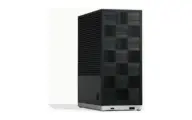 AMD Ryzen AI Max+ 395 (128 GB)
-
77Great quality (A) · 77 of 100: how capable the model is at Q4_K_M, whatever it runs on. Match score 89/100 (quality, fit, speed and memory use) sets the ranking.
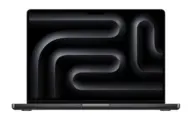 Apple M4 Max (128 GB)
Quick answers
How much memory does Ling 3.0 Flash (127B-A5B) need on the M1 Ultra 128GB?
At Q4_K_M it needs about 86.4 GB. The M1 Ultra 128GB has 96.0 GB usable.
How fast is Ling 3.0 Flash (127B-A5B) on the M1 Ultra 128GB?
About 106 tok/s at Q4_K_M, an estimate from the hardware’s memory bandwidth and the size of the model.
Which quantization of Ling 3.0 Flash (127B-A5B) should I use on the M1 Ultra 128GB?
Q4_K_M. Of the versions that fit, it is the one that runs best; when two run equally well, the check prefers the higher-rated one.
Estimates come from published hardware specs and our open formulas, not from running the model on your machine. Real speed varies with runtime, drivers and settings. Numbers marked “Measured” come from a linked benchmark.