

Ming-Image 0.1 Design on Apple M4 Max (64 GB)

Can the Apple M4 Max (64 GB) run Ming-Image 0.1 Design?
Yes, but slowly
Slow. At FP8 it needs about 39.2 GB of 48.0 GB usable and takes about 86 s per image.
- Best precision
FP8- Memory mode
- Everything on GPU
- Time per image
- 86 s
- Output
- 2048×2048, 12 steps
Best app to run it on the Apple M4 Max (64 GB)
On macOS
- Runs this model with built-in or popular custom nodes; GGUF files load with ComfyUI-GGUF.

Download Ming-Image 0.1 Design
Original weights · Hugging Face
Full-precision files from Ant Group (inclusionAI), for fine-tuning, vLLM, Transformers, Diffusers or ComfyUI.
huggingface.co/inclusionAI/Ming-Image-0.1-Design (opens in a new tab)
Official repo · GitHub
Reference code, inference scripts and docs from Ant Group (inclusionAI). The weights themselves download from Hugging Face.
github.com/inclusionAI/Ming-Image (opens in a new tab)
git clone https://github.com/inclusionAI/Ming-ImageHow it’s rated
Match score
To order lists, each result also gets a match score out of 100 from four parts. It favors the most capable model that still runs well.
| Model quality | 37.9 / 45 | |
|---|---|---|
| Memory fit | 25.0 / 25 | |
| Speed | 5.1 / 15 | |
| Memory use | 15.0 / 15 | |
| Match score | 83.0 / 100 |
Every precision on the Apple M4 Max (64 GB)
| Quant | Memory needed | Available | Speed | Memory mode | Runs | Quality | Download |
|---|---|---|---|---|---|---|---|
FP16 | 26.8 GB | 48.0 GB | 1.7 min | Text encoder offloaded | Slowencoder unloaded after use | 86Excellent quality (A+) · 86 of 100: how capable the model is at FP16, whatever it runs on. Match score 76/100 (quality, fit, speed and memory use) sets the ranking. | Original weights (opens in a new tab) |
FP8 | 39.2 GB | 48.0 GB | 86 s | Everything on GPU | Slow | 84Great quality (A) · 84 of 100: how capable the model is at FP8, whatever it runs on. Match score 83/100 (quality, fit, speed and memory use) sets the ranking. | Original weights (opens in a new tab) |
Other hardware that runs it
-
86Excellent quality (A+) · 86 of 100: how capable the model is at FP16, whatever it runs on. Match score 92/100 (quality, fit, speed and memory use) sets the ranking.
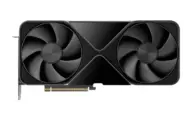 NVIDIA RTX PRO 6000 Blackwell
-
86Excellent quality (A+) · 86 of 100: how capable the model is at FP16, whatever it runs on. Match score 87/100 (quality, fit, speed and memory use) sets the ranking.
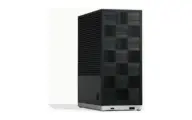 AMD Ryzen AI Max+ 395 (128 GB)
-
86Excellent quality (A+) · 86 of 100: how capable the model is at FP16, whatever it runs on. Match score 86/100 (quality, fit, speed and memory use) sets the ranking.
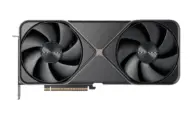 NVIDIA GeForce RTX 5090
-
86Excellent quality (A+) · 86 of 100: how capable the model is at FP16, whatever it runs on. Match score 86/100 (quality, fit, speed and memory use) sets the ranking.
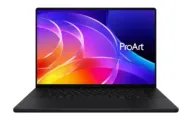 NVIDIA RTX Spark N1X (6144-core GPU) (128 GB)
-
86Excellent quality (A+) · 86 of 100: how capable the model is at FP16, whatever it runs on. Match score 84/100 (quality, fit, speed and memory use) sets the ranking.
 NVIDIA GB10 (128 GB)
-
84Great quality (A) · 84 of 100: how capable the model is at FP8, whatever it runs on. Match score 83/100 (quality, fit, speed and memory use) sets the ranking.
 NVIDIA GeForce RTX 4090
Quick answers
How much memory does Ming-Image 0.1 Design need on the M4 Max 64GB?
At FP8 it needs about 39.2 GB. The M4 Max 64GB has 48.0 GB usable.
How long does Ming-Image 0.1 Design take on the M4 Max 64GB?
About 86 s per image at FP8 and default settings, an estimate scaled from a reference timing by this hardware’s compute speed.
Estimates come from published hardware specs and our open formulas, not from running the model on your machine. Real speed varies with runtime, drivers and settings. Numbers marked “Measured” come from a linked benchmark.