

Mistral 7B Instruct v0.3 on UP Squared Pro 7000 (8 GB)
Can the UP Squared Pro 7000 (8 GB) run Mistral 7B Instruct v0.3?
Yes, but slowly (far over GPU memory limit)
Slow (far over GPU memory limit). At Q2_K it needs about 4.9 GB of 4.0 GB usable, with an estimated speed of 6.9 tok/s.
- Best quant
Q2_K- Generation speed
- 6.9 tok/s
- Prompt processing
- 97.1 tok/s
- First token (1K prompt)
- 10.5 s
- Largest safe context
- —
Best app to run it on the UP Squared Pro 7000 (8 GB)
On Windows
- Splits the model between GPU memory and system RAM, which this setup needs.
- Gives you direct control of how many layers sit on the GPU, the best way to squeeze a model that doesn’t quite fit.
- Supports Intel Arc through SYCL and Vulkan.
llama-server -hf bartowski/Mistral-7B-Instruct-v0.3-GGUF:Q2_KOn Linux
- Splits the model between GPU memory and system RAM, which this setup needs.
- Gives you direct control of how many layers sit on the GPU, the best way to squeeze a model that doesn’t quite fit.
- Supports Intel Arc through SYCL and Vulkan.
llama-server -hf bartowski/Mistral-7B-Instruct-v0.3-GGUF:Q2_KDownload Mistral 7B Instruct v0.3
Recommended for the UP Squared Pro 7000 (8 GB): Q2_K. Every other quantization has its own download link in the table below.
Quickest · Ollama
One command downloads a ready-to-run version and starts a chat.
ollama run mistral:7b-instruct-q2_KQuantized files · GGUF
Works in LM Studio, llama.cpp, Jan and Ollama. No sign-in needed.
Download the Q2_K file (opens in a new tab)
huggingface.co/bartowski/Mistral-7B-Instruct-v0.3-GGUF (opens in a new tab)
ollama run hf.co/bartowski/Mistral-7B-Instruct-v0.3-GGUF:Q2_KOriginal weights · Hugging Face
Full-precision files from Mistral AI, for fine-tuning, vLLM, Transformers.
huggingface.co/mistralai/Mistral-7B-Instruct-v0.3 (opens in a new tab)
Official repo · GitHub
Reference code, inference scripts and docs from Mistral AI. The weights themselves download from Hugging Face.
github.com/mistralai/mistral-inference (opens in a new tab)
git clone https://github.com/mistralai/mistral-inferenceHow it’s rated
Match score
To order lists, each result also gets a match score out of 100 from four parts. It favors the most capable model that still runs well.
| Model quality | 12.0 / 45 | |
|---|---|---|
| Memory fit | 4.0 / 25 | |
| Speed | 6.2 / 15 | |
| Memory use | 15.0 / 15 | |
| Match score | 37.2 / 100 |
Every quantization on the UP Squared Pro 7000 (8 GB)
| Quant | Memory needed | Available | Speed | Runs | Quality | Download |
|---|---|---|---|---|---|---|
Q2_K | 4.9 GB | 4.0 GB | 6.9 tok/s | Slowfar over GPU memory limit | 26Basic quality (D) · 26 of 100: how capable the model is at Q2_K, whatever it runs on. Match score 37/100 (quality, fit, speed and memory use) sets the ranking. | GGUF (opens in a new tab) |
Q3_K_M | 5.5 GB | 4.0 GB | — | Won't run | 31Basic quality (D) · 31 of 100: how capable the model is at Q3_K_M, whatever it runs on. Match score 4/100 (quality, fit, speed and memory use) sets the ranking. | GGUF (opens in a new tab) |
Q4_K_M | 6.4 GB | 4.0 GB | — | Won't run | 36Basic quality (D) · 36 of 100: how capable the model is at Q4_K_M, whatever it runs on. Match score 4/100 (quality, fit, speed and memory use) sets the ranking. | GGUF (opens in a new tab) |
Q5_K_M | 7.1 GB | 4.0 GB | — | Won't run | 36Basic quality (D) · 36 of 100: how capable the model is at Q5_K_M, whatever it runs on. Match score 4/100 (quality, fit, speed and memory use) sets the ranking. | GGUF (opens in a new tab) |
Q6_K | 7.9 GB | 4.0 GB | — | Won't run | 37Basic quality (D) · 37 of 100: how capable the model is at Q6_K, whatever it runs on. Match score 5/100 (quality, fit, speed and memory use) sets the ranking. | GGUF (opens in a new tab) |
Q8_0 | 9.7 GB | 4.0 GB | — | Won't run | 38Basic quality (D) · 38 of 100: how capable the model is at Q8_0, whatever it runs on. Match score 5/100 (quality, fit, speed and memory use) sets the ranking. | GGUF (opens in a new tab) |
F16 | 16.5 GB | 4.0 GB | — | Won't run | 38Basic quality (D) · 38 of 100: how capable the model is at F16, whatever it runs on. Match score 5/100 (quality, fit, speed and memory use) sets the ranking. | Original weights (opens in a new tab) |
Memory figures assume 8K of context. Longer conversations or documents grow the KV cache.
Other hardware that runs it
-
38Basic quality (D) · 38 of 100: how capable the model is at Q8_0, whatever it runs on. Match score 72/100 (quality, fit, speed and memory use) sets the ranking.
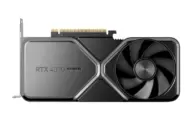 NVIDIA GeForce RTX 4070 SUPER
-
38Basic quality (D) · 38 of 100: how capable the model is at F16, whatever it runs on. Match score 72/100 (quality, fit, speed and memory use) sets the ranking.
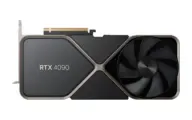 NVIDIA GeForce RTX 4090
-
37Basic quality (D) · 37 of 100: how capable the model is at Q6_K, whatever it runs on. Match score 71/100 (quality, fit, speed and memory use) sets the ranking.
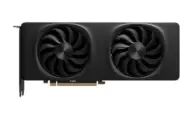 Intel Arc B580
-
37Basic quality (D) · 37 of 100: how capable the model is at Q6_K, whatever it runs on. Match score 71/100 (quality, fit, speed and memory use) sets the ranking.
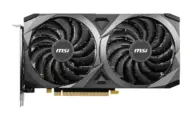 NVIDIA GeForce RTX 3060 12GB
-
38Basic quality (D) · 38 of 100: how capable the model is at Q8_0, whatever it runs on. Match score 71/100 (quality, fit, speed and memory use) sets the ranking.
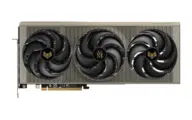 AMD Radeon RX 9070 XT
-
38Basic quality (D) · 38 of 100: how capable the model is at Q8_0, whatever it runs on. Match score 71/100 (quality, fit, speed and memory use) sets the ranking.
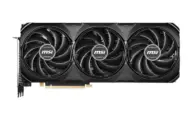 NVIDIA GeForce RTX 4070 Ti SUPER
Quick answers
How much memory does Mistral 7B Instruct v0.3 need on the UP Squared Pro 7000 8GB?
At Q2_K it needs about 4.9 GB. The UP Squared Pro 7000 8GB has 4.0 GB usable.
How fast is Mistral 7B Instruct v0.3 on the UP Squared Pro 7000 8GB?
About 6.9 tok/s at Q2_K, an estimate from the hardware’s memory bandwidth and the size of the model.
Which quantization of Mistral 7B Instruct v0.3 should I use on the UP Squared Pro 7000 8GB?
Q2_K. Of the versions that fit, it is the one that runs best; when two run equally well, the check prefers the higher-rated one.
Estimates come from published hardware specs and our open formulas, not from running the model on your machine. Real speed varies with runtime, drivers and settings. Numbers marked “Measured” come from a linked benchmark.