

Animagine XL 3.1 on Arduino UNO Q (4 GB)

Can the Arduino UNO Q (4 GB) run Animagine XL 3.1?
No, it doesn’t fit
No. Animagine XL 3.1 needs about 2.9 GB even at FP8; the Arduino UNO Q (4 GB) has 2.8 GB usable.
Download Animagine XL 3.1
Original weights · Hugging Face
Full-precision files from Cagliostro Lab, for fine-tuning, vLLM, Transformers, Diffusers or ComfyUI.
huggingface.co/cagliostrolab/animagine-xl-3.1 (opens in a new tab)
How it’s rated
Match score
To order lists, each result also gets a match score out of 100 from four parts. It favors the most capable model that still runs well.
| Model quality | 7.4 / 45 | |
|---|---|---|
| Memory fit | 0.0 / 25 | |
| Speed | 0.0 / 15 | |
| Memory use | 0.0 / 15 | |
| Match score | 7.4 / 100 |
Every precision on the Arduino UNO Q (4 GB)
| Quant | Memory needed | Available | Speed | Memory mode | Runs | Quality | Download |
|---|---|---|---|---|---|---|---|
FP16 | 3.8 GB | 2.8 GB | — | — | Won't run | 56Good quality (B) · 56 of 100: how capable the model is at FP16, whatever it runs on. Match score 7/100 (quality, fit, speed and memory use) sets the ranking. | Original weights (opens in a new tab) |
FP8 | 2.9 GB | 2.8 GB | — | — | Won't run | 54Fair quality (C) · 54 of 100: how capable the model is at FP8, whatever it runs on. Match score 7/100 (quality, fit, speed and memory use) sets the ranking. | Original weights (opens in a new tab) |
Hardware that can run it
-
56Good quality (B) · 56 of 100: how capable the model is at FP16, whatever it runs on. Match score 80/100 (quality, fit, speed and memory use) sets the ranking.
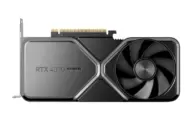 NVIDIA GeForce RTX 4070 SUPER
-
56Good quality (B) · 56 of 100: how capable the model is at FP16, whatever it runs on. Match score 78/100 (quality, fit, speed and memory use) sets the ranking.
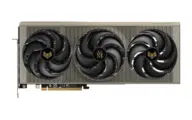 AMD Radeon RX 9070 XT
-
56Good quality (B) · 56 of 100: how capable the model is at FP16, whatever it runs on. Match score 78/100 (quality, fit, speed and memory use) sets the ranking.
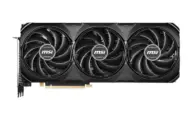 NVIDIA GeForce RTX 4070 Ti SUPER
-
56Good quality (B) · 56 of 100: how capable the model is at FP16, whatever it runs on. Match score 78/100 (quality, fit, speed and memory use) sets the ranking.
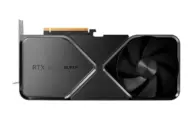 NVIDIA GeForce RTX 4080 SUPER
-
56Good quality (B) · 56 of 100: how capable the model is at FP16, whatever it runs on. Match score 78/100 (quality, fit, speed and memory use) sets the ranking.
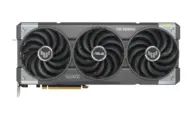 NVIDIA GeForce RTX 5070 Ti
-
56Good quality (B) · 56 of 100: how capable the model is at FP16, whatever it runs on. Match score 78/100 (quality, fit, speed and memory use) sets the ranking.
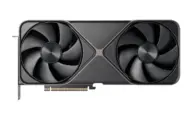 NVIDIA GeForce RTX 5080
Models that do run on the Arduino UNO Q (4 GB)
- 28Basic quality (D) · 28 of 100: how capable the model is at FP16, whatever it runs on. Match score 54/100 (quality, fit, speed and memory use) sets the ranking. SD Turbo
- 42Fair quality (C) · 42 of 100: how capable the model is at FP16, whatever it runs on. Match score 54/100 (quality, fit, speed and memory use) sets the ranking. Realistic Vision V5.1
- 40Fair quality (C) · 40 of 100: how capable the model is at FP16, whatever it runs on. Match score 53/100 (quality, fit, speed and memory use) sets the ranking. DreamShaper 8
- 30Basic quality (D) · 30 of 100: how capable the model is at FP16, whatever it runs on. Match score 51/100 (quality, fit, speed and memory use) sets the ranking. LCM DreamShaper v7
- 50Fair quality (C) · 50 of 100: how capable the model is at FP16, whatever it runs on. Match score 51/100 (quality, fit, speed and memory use) sets the ranking. PixArt-Σ XL 1024


Quick answers
How much memory does Animagine XL 3.1 need on the Arduino UNO Q 4GB?
Even at FP8 it needs about 2.9 GB; the Arduino UNO Q 4GB has 2.8 GB usable.
What can the Arduino UNO Q 4GB run instead?
SD Turbo, Realistic Vision V5.1 and DreamShaper 8 run best on it; the page lists more, each with its speed.
What hardware can run Animagine XL 3.1?
RTX 4070 SUPER 12GB, RX 9070 XT 16GB and RTX 4070 Ti SUPER 16GB run it; the page lists more, each with its speed.
Estimates come from published hardware specs and our open formulas, not from running the model on your machine. Real speed varies with runtime, drivers and settings. Numbers marked “Measured” come from a linked benchmark.